
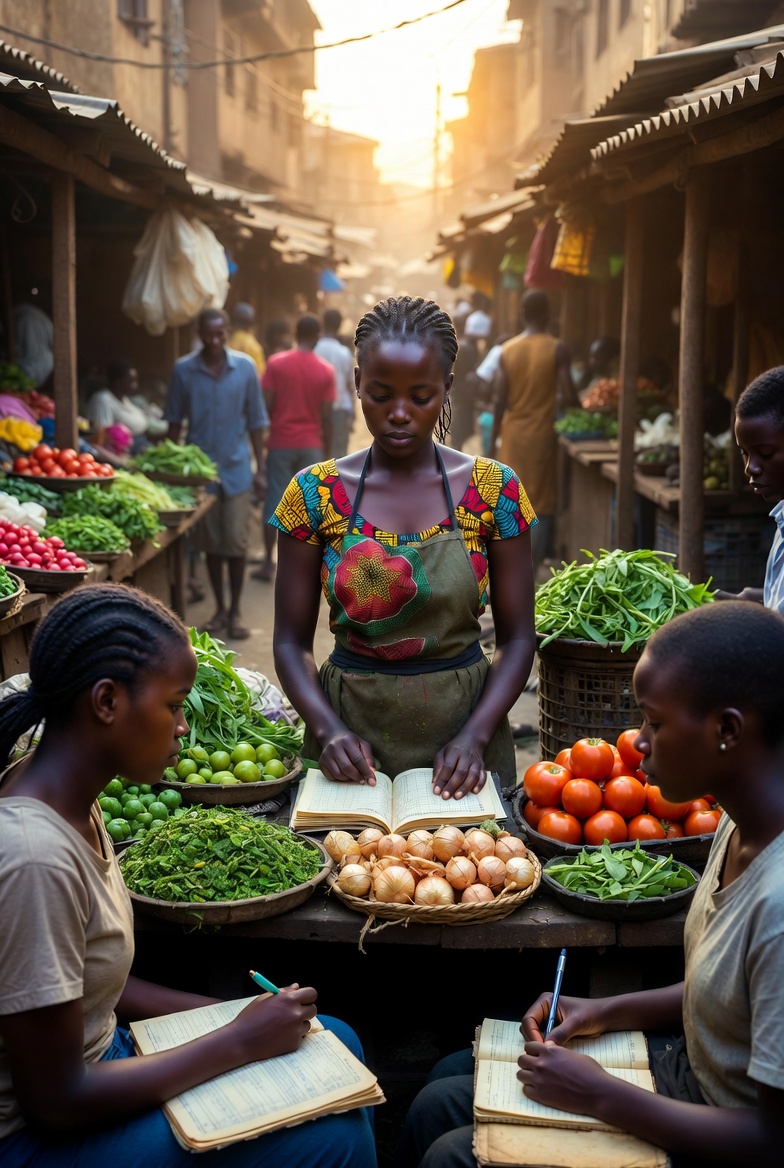
At 24, Amina Wanjiku runs a small vegetable stall along the busy lanes of Makina Ward in Kibera. But her work doesn’t stop at selling sukuma and tomatoes. Every evening, she mentors three teenage girls from her neighborhood, teaching them bookkeeping and savings using the same worn ledger she uses for her business.
Amina left school at 16 when her mother fell ill. “I was the eldest. Someone had to provide,” she says. She started with a KES 500 loan from a women’s chama in Makina and a sack of onions. The first months were brutal. “County askaris would chase us. Some days I sold nothing. But I kept records. I wanted to prove a girl from Kibera could grow something from zero.”
Three years in, she now earns enough to support her siblings and save KES 200 weekly through M-Pesa. Her stall became a classroom. “Girls come to buy, then stay to ask: How do you price? How do you handle rude customers? How do you say no to early marriage?”
Her biggest challenge isn’t capital — it’s belief. “People tell girls in Kibera their place is home. I tell them their place is wherever they choose to build.” Last month, one of her mentees opened her own mandazi stand near Makina Market.
Amina dreams of formalizing her mentorship into a GYW savings group for Makina Ward. “If 10 of us each teach 3 girls, that’s 30 futures changed. From one stall in Kibera.”
Her story is not about poverty. It’s about agency. About a young woman from Makina who took livelihood into her own hands and is now passing that power on, one ledger, one girl at a time.