
From Voices to Influence: Highlights from the 6th Annual Girls Assembly
“Young people cannot be discussed in their absence.” — Jane Anyango, Founder and Executive Director, Polycom Girls
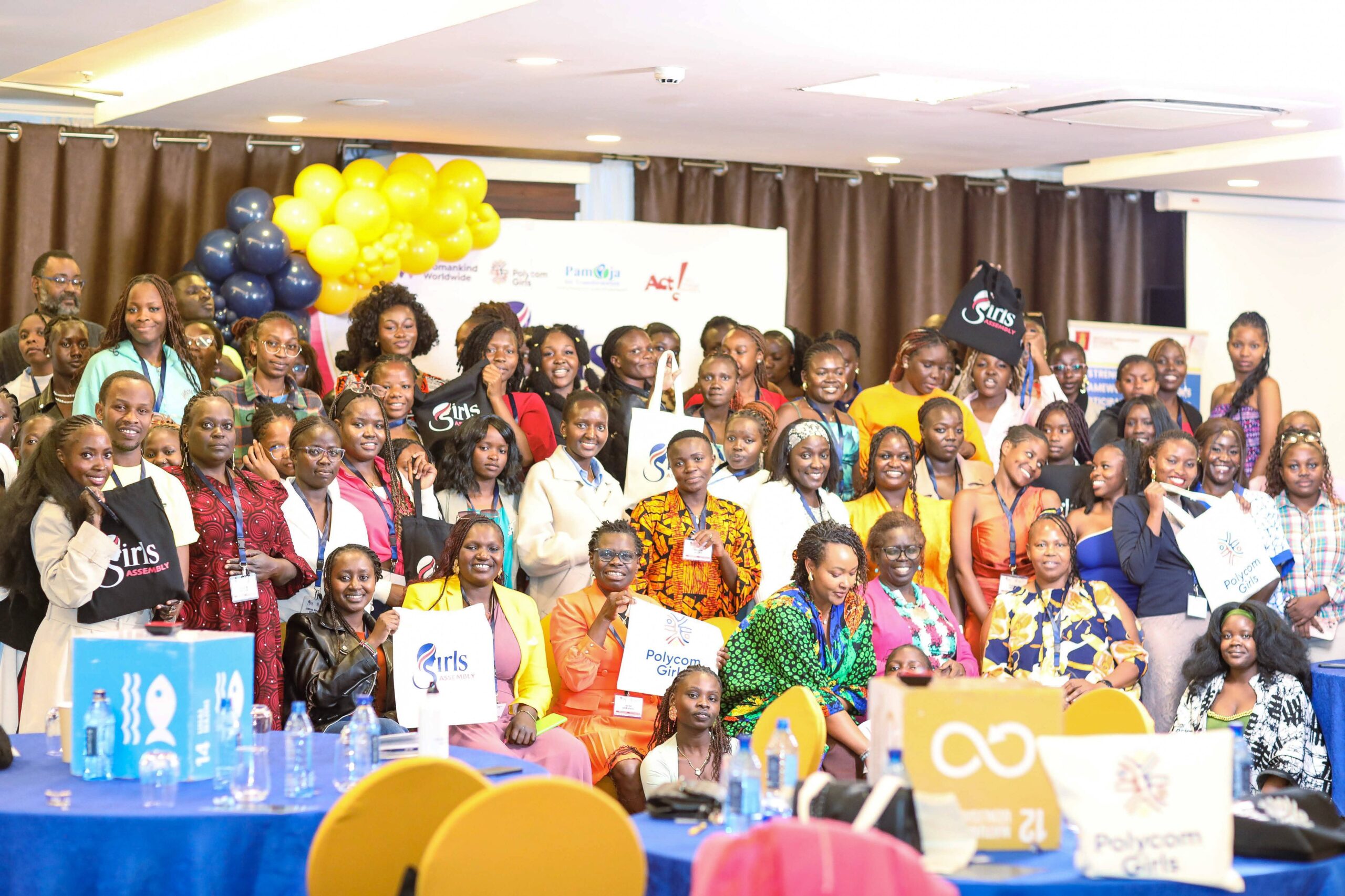
On 15 and 16 September, more than 120 adolescent girls and young women from across Kenya gathered in Nairobi for the 6th Annual Girls Assembly. The theme was “Unleashing Authentic Feminine Leadership.” The girls showed up in vibrant colour, dancing, laughing and diving into the conversations that matter. They left with a clear message: girls are no longer content to be beneficiaries of development programmes. They want to help shape the decisions that affect their lives.
A room built with girls, not for them
Every Girls Assembly is grounded in the 4Cs: connect, co-create, champion and celebrate. The Assembly opened in style and substance on 15 September, when the girls connected and co-created. On 16 September, they championed and celebrated.
The 4Cs were visible in how the Assembly was shaped. Girls helped design the programme and the conversations, and they pitched their own ideas. They also contributed towards their own participation, which strengthened their ownership of the space.
As our Programs Officer, Aphline Yogo, put it: “Girls are pitching their ideas and we want them to be realized.” She added that the Assembly is about being intentional, and that it shows in the people you get into the room.
The issues girls put on the table
The agenda covered the issues girls and young women face every day:
- Ending Violence Against Women and Girls (EVAWG)
- Technology-Facilitated Gender-Based Violence (TFGBV)
- Girls’ and women’s agency and participation in decision-making
- Climate justice
- Water, sanitation and hygiene (WASH)
- Women’s economic justice and rights
- Women, Peace and Security
- Partnerships and male allyship
Florence Syevuo, Executive Director of the SDGs Kenya Forum, reminded participants that these are not abstract topics. “SDGs embody the lived realities of the girls,” she said. Safe environments, menstrual health and hygiene, and online safety are part of girls’ daily experience. She also challenged everyone working in development: “We cannot do development from a place of what we know. We must include the girls as we seek answers to their problems.”
Leadership that listens
Our keynote speaker, H.E. Henk Jan Bakker, Ambassador of the Netherlands to Kenya and Permanent Representative to UNEP and UN-Habitat, spoke to the young leaders about what good leadership looks like. “A good leader is open to other opinions and other voices,” he said. He urged them to make room for different views rather than surrounding themselves with people who simply agree.
He also noted that development partners can offer resources and support, but lasting progress at scale depends on ownership by communities and governments. This idea of locally led development ran through both days. Participants agreed that grassroots organisations need the capacity, partnerships and ownership to sustain their work beyond any single project.
The FEMInspire Pitch: bold ideas, real backing
One of the flagship sessions was the FEMInspire Pitch, where young women with bold, inspiring ideas presented to their peers and stakeholders.
The winning idea came from Faith Agutu, who received $100 to advance her initiative, the Red Flag Movement. The Movement reimagines the role of girls and young women in building safer communities. Rather than casting girls as vulnerable or as survivors, it positions them as active agents who identify risks and shape solutions.
The FEMInspire Champion Award will fund early project materials and, just as importantly, direct engagement with girls and young women themselves, so the initiative is shaped by their experiences and perspectives from the start. The goal is to strengthen girls’ awareness, confidence and agency, so they can recognise issues affecting their safety and wellbeing and take an active role in creating change.
The Red Flag Movement builds toward our short-term outcome of girls expressing their needs confidently and safely.
From conversation to commitment
The Assembly advances our medium-term outcome of girls and young women influencing decisions in schools, communities and youth structures. Its outputs carried into the Peace Memorandum, so that what girls said in the room goes on to inform conversations beyond it.
With Kenya heading towards the 2027 General Election, participants stressed the need for safe, meaningful spaces where young women can take part in governance and public decision-making. They also stressed the need to stay engaged when political periods get difficult. Girls should not only take part in electoral processes. They should be equipped to help build peaceful, inclusive communities.
That is why the 7th Annual Girls Assembly will focus on peace and social cohesion, building on this year’s conversations.
Five years, 1,000+ connections
Over the past five years, the Girls Assembly has connected more than 1,000 young women with mentors, policymakers, women leaders, donors and development partners. These connections help turn commitments to gender equality into real opportunities for girls to lead and to influence change in their communities.
With thanks to our partners
The Girls Assembly is possible because of partners who believe girls should help lead the conversation. We are grateful to Urgent Action Fund, Act Change Transform, Womankind and FEMNET for standing with us and supporting girls’ leadership, voice and participation.
We also thank the girls and young women who showed up with ideas and courage, our speakers and guests, and the media houses that amplified the conversation, including KBC, NTV, Tukio, StorySpotlight and Nipashe Biz Media.
Want to be part of the 7th Assembly? Follow Polycom Girls for updates, and talk to us about mentoring, partnering or supporting the next generation of girl leaders.